AI Use Cases
AI in Finance: From Fraud Detection to Personalized Banking
Explore how finance with AI solutions is transforming the industry with advanced trading algorithms, fraud detection, and personalized financial services.
Share
The financial services industry is undergoing an intense transformation; indeed, 75 % of firms in the UK already report using AI, and another 10 % are planning to within the next three years—making AI solutions the actual driver of change.
From algorithmic trading and fraud detection to personalized banking services, over 85 % of financial firms already apply AI across risk modelling, operations, and digital marketing. AI is redefining how institutions operate and compete.
This reflects the critical role of AI in enhancing decision-making, risk management, and customer experience. As we expect technology to continue its progress, understanding the opportunities and challenges presented by AI becomes essential for stakeholders who are looking for modern finance with AI solutions.
Here are some of the statistics based on the implementation of AI in financial markets:
- According to some recent reports, AI’s implementation in finance has increased by over 60% in the past five years.
- It is expected that in the time frame of 2024-2030, there will be a 30.6% growth rate in AI.
- Thirty-six percent of financial services executives have implemented AI to cut costs 10%.
How AI Helps in Revolutionizing Finance with AI Solutions
AI plays an important role in revolutionizing the finance industry by introducing innovative solutions that enhance accuracy. Through these advanced solutions, financial institutions can detect fraudulent activities in real-time, automate routine tasks, and optimize trading strategies.
All of these things can be done with minimal human intervention. AI solutions are not only streamlining operations, but they are also providing innovative products and services that can transform how the industry operates.
Key Technologies Supporting This Shift
The transformation of finance through AI involves several technological advancements. Here are a few of them:
- Machine‑learning and deep‑learning algorithms help analyse vast datasets to detect patterns and forecast trends. Indeed, in one study, 22% of AI‐use cases in financial services were in operations/IT and 11% in retail banking.
- Neural networks and large language models further expand AI capabilities, allowing for more precise risk assessment and personalized investment strategies.
- Natural Language Processing (NLP), on the other hand, helps in building chatbots, virtual assistants, and automated systems for compliance monitoring. For example, more than 30 % of firms expect to use AI for regulatory compliance and reporting within the next three years.
Additionally, advancements in cloud computing can help in providing scalable, cost-effective solutions, while innovations in blockchain technology can enhance security and transparency in financial transactions. Together, these cutting-edge technologies can create a sustainable infrastructure for an ongoing revolution in finance.
1. Enhancing Customer Experience Through AI
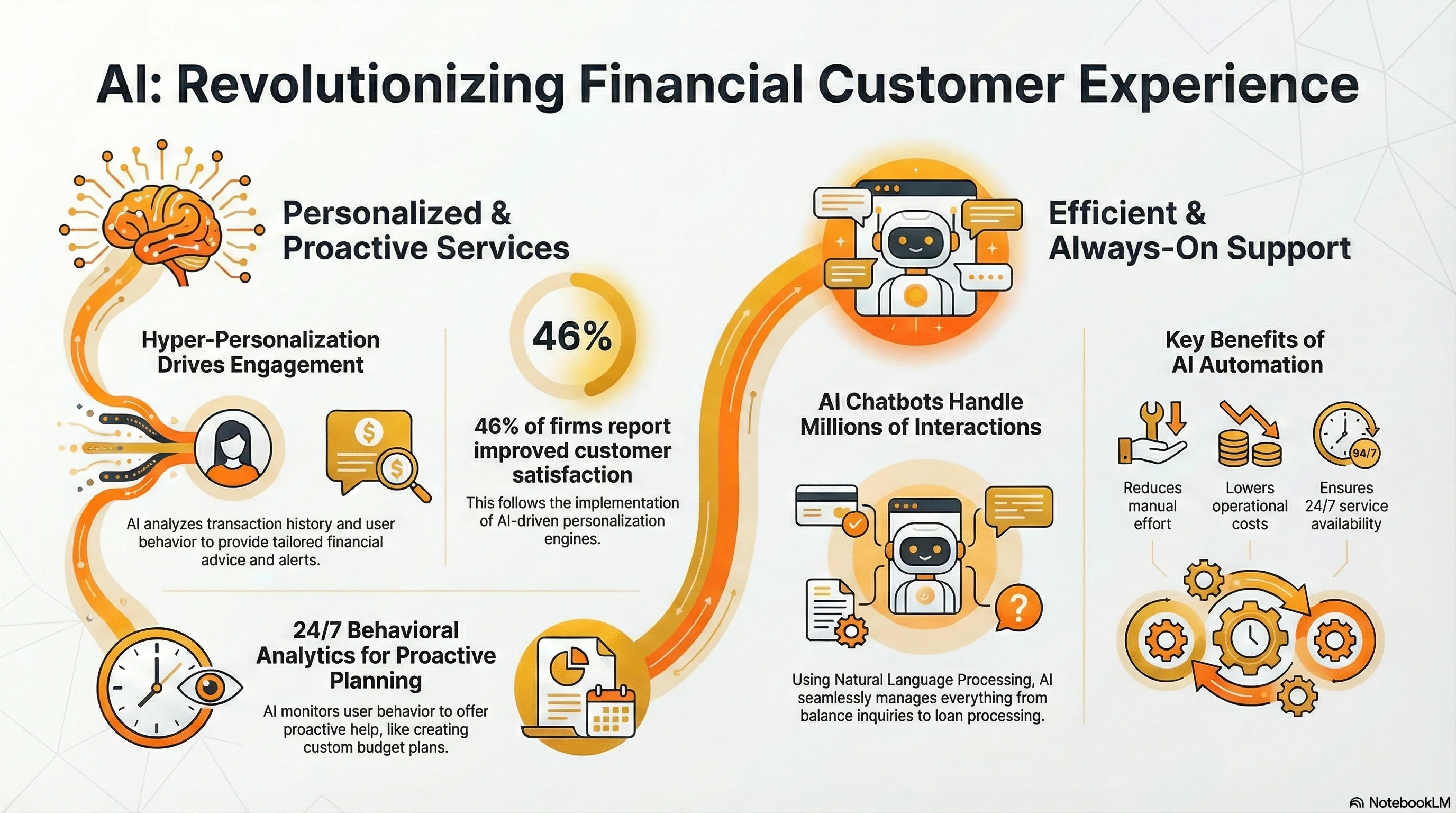
Enhancing customer experience in financial services through AI involves creating more personalized, efficient, and secure services. The finance with AI solutions can help in enhancing the customer journey. Let’s see how:
A) Personalization Engines in Digital Banking
One of the interesting facts about AI is that it focuses on hyper-personalization. It can be done by analyzing transaction history, customer behavior, and real-time preferences. You may be thinking, Why personalization? Because everyone loves tailored and custom options.
Banks and fintech firms use AI to recommend financial advice and deliver contextual alerts, 46 % of firms report improved customer satisfaction following such AI implementations.
B) AI-Powered Chatbots and Virtual Assistants
Since the introduction of ChatGPT, companies are working to create unbiased chatbots. However, the question arises: how are AI solutions preferred in finance? Chatbots and virtual assistants undergo training before being deployed in any context. For example, a banking chatbot is different from one handling customer calls.
NLP can help people with AI solutions through chatbots to handle millions of transactions and customer interactions seamlessly. From balance inquiries to loan processing, AI can do it all. You can reduce the manual efforts and lower operational costs while maintaining 24/7 availability.
C) 24/7 Service and Behavioral Analytics
AI systems can continuously monitor user behavior to identify solutions. The solutions indirectly benefit financing in several ways, such as someone who is interested in purchasing a car from a bank but is on a tight budget. So, what AI will do is create a perfect plan based on its salary, needs, and obviously, custom commands.
Whether it's detecting a potential overdraft or recommending saving opportunities, finance with AI solutions can improve overall financial planning and the customer experience of banking.
2. Improving Security, Risk, and Fraud Detection
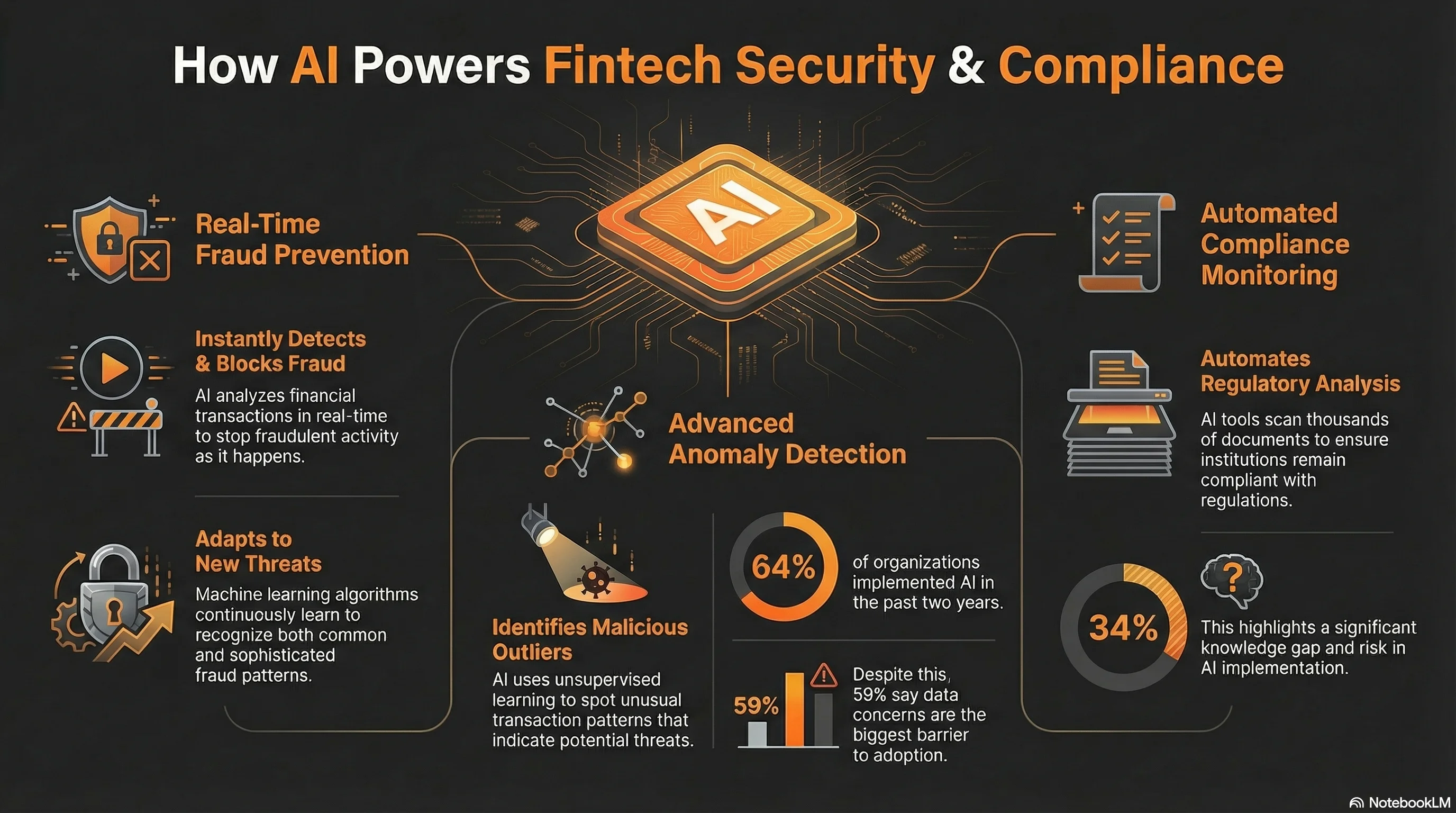
Improving risks and security is necessary because of compliance monitoring and to enhance the regulation of anomaly detection. These capabilities strengthen financial institutions to adhere to complex regulations. Here is how it is done:
A) Real-Time Fraud Prevention Using ML
Frauds are common nowadays, while AI can help in preventing such scenarios. AI models are designed to analyze real-time financial transactions to detect and block fraudulent activity. Any activity that encounters signs of fraud, such as someone withdrawing a large amount or even emptying their bank balance, AI will notice and take action to ensure the user is safe.
Machine learning algorithms adapt over time, enhancing fraud detection by recognizing both common and sophisticated fraud patterns in the context of fintech. These algorithms will be working on usernames and passwords for protection.
B) Anomaly Detection Across Transactions
By using unsupervised learning, AI systems identify outliers indicating malicious activity, 64 % of organisations implemented AI in the past two years, while 59 % say data concerns are the biggest barrier to adoption.
AI can even detect it when you deviate from known fraud signatures. This significantly reduces the chances of false positives and improves risk management efficacy.
C) AI in Regulatory and Compliance Monitoring
AI systems can be easily utilized in regulation and compliance monitoring due to their training and task execution capabilities. A common example in this context is audits. During the auditing process, AI tools assist in preventing data loss and reducing human errors.
AI tools can analyse thousands of pages to flag non‑compliance, but notably, just 34 % of firms say they have a ‘complete understanding’ of the AI technologies they use, while 46 % only a partial understanding.
There are AI tools available that can analyze thousands of pages. These pages include regulatory documents, ensuring institutions remain compliant with potential risks. NLP models are designed to detect policy deviations, monitor transaction behavior, flag suspicious activities, and much more.
3. Enabling Data-Driven Decision Making
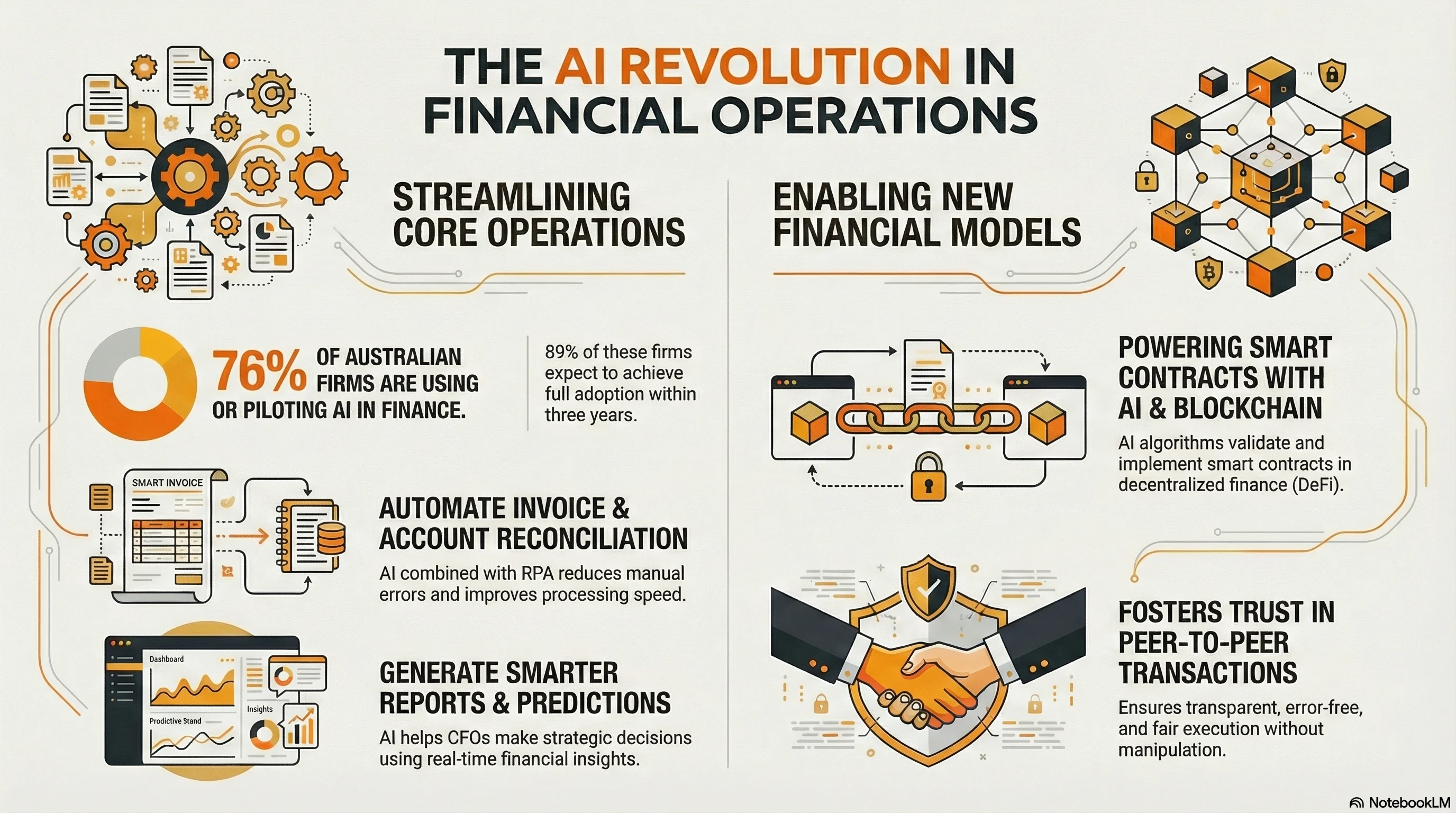
Data-driven decision-making in fintech is crucial because it enhances accuracy, efficiency, and strategic insights. AI can analyze vast amounts of data sets to drive growth and stability for businesses. Let’s explore its details:
A) Predictive Analytics for Credit Scoring and Investments
Predictive analytics are used to anticipate future outcomes. This is a crucial step for the banking and finance sector because some accounts are profit-based. To navigate challenges in these scenarios, AI tools step in.
These advanced tools use predictive analytics to enhance the credit risk analysis by adding alternative data sources. The examples include social media activity, mobile phone usage, and transaction histories in credit models. Investment firms can use AI for portfolio management and investment strategies to check market conditions.
B) NLP in Document and Contract Analysis
NLP enables AI to interact with humans, making it easier to communicate and collaborate. So, tools trained on it can analyze various documents, statements, and even settlements in financial cases.
The NLP-based tools can automatically read and summarize complex financial documents. This allows analysts and legal teams to extract insights. It can be done from unstructured data to assess risks and ensure compliance in a fraction of the time.
C) Sentiment Analysis in Market Intelligence
Sentiment analysis steps in when people are confused about making financial decisions. By analyzing market sentiment through various channels, such as news and social media, users can get access to real-time market trends.
Traders and analysts can use this data to inform trading strategies, including algorithmic trading, and mitigate risks. You may be wondering how AI will do it. AI uses advanced algorithms to find out everything based on its training model. It’s not a hectic task anymore.
4. Automating and Streamlining Financial Operations
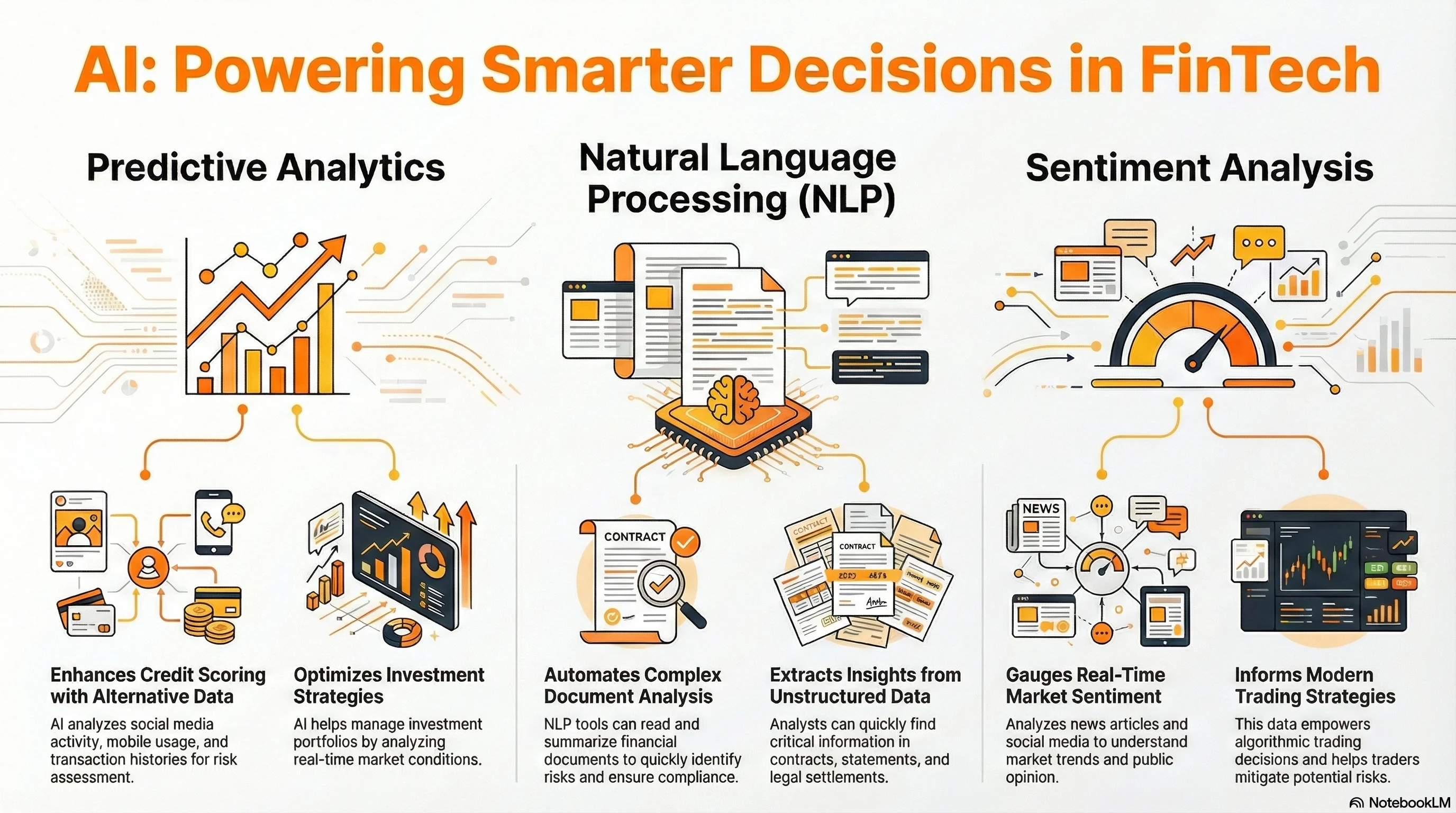
One of the prominent advantages of finance with AI solutions is automation. Financial institutions are increasingly adopting AI to remain competitive, enhance operational efficiency, and deliver superior customer experiences. Let’s have a look at them:
A) Invoice Processing and Accounts Reconciliation
Robotic Process Automation (RPA), when combined with AI, can automate various processes, such as invoice matching, data extraction from PDFs, and bank statement reconciliation. This, in turn, reduces manual errors and improves processing speed across various departments.
For instance, 76 % of Australian companies are already using or piloting AI in financial processes, with 89 % expecting full adoption within three years.
These departments include accounting ones to reduce costs and enhance efficiency. Everything in the finance department can be automated, but it is not a replacement for humans.
B) AI-Driven Reporting and Prediction
AI tools are designed to streamline financial reporting by automatically generating insights and trend analysis. Moreover, firms expect the median number of AI use‑cases to jump from 9 to 21 within the next three years.
CFOs (Chief Finance Officers) in any organization can use AI’s predictive ability to make strategic decisions based on real-time financial health indicators and with financial modeling.
C) Smart Contract Execution with AI and Blockchain
In the case of decentralized finance (DeFi), AI algorithms can validate and implement smart contracts, ensuring transparency and error-free execution of tasks. This supports new operating models and builds trust in peer-to-peer transactions and decentralized exchanges.
As a result, it supports new ways of operating financial transactions where individuals trade directly with each other. It also builds confidence by handling fairly and without manipulation.
Benefits of AI Tools in the Finance Markets
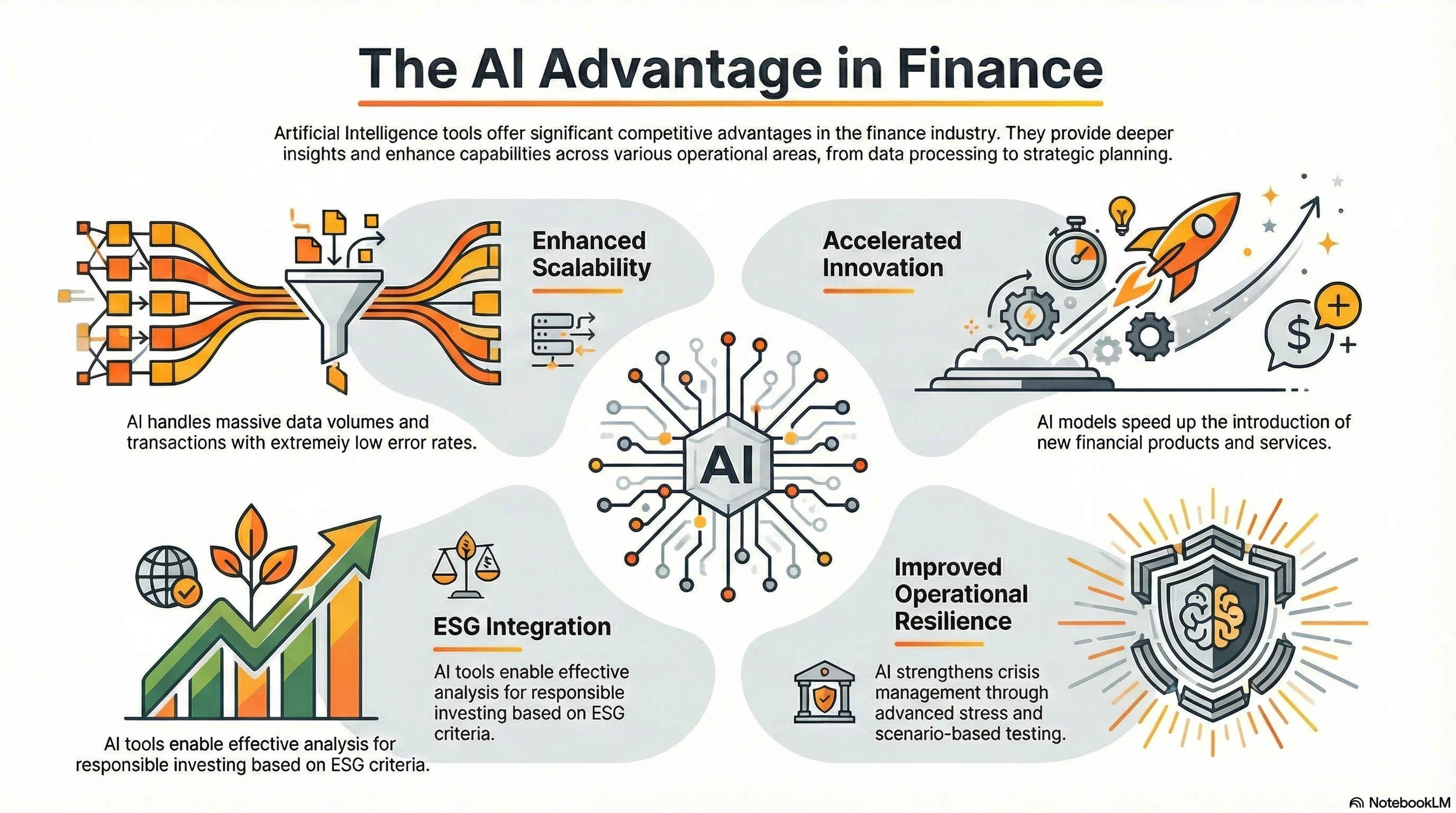
AI tools offer various competitive advantages with deeper insights in the finance sector, as mentioned above. While it depends on a person, how they'll take advantage of a scenario, some of the generalized ones are as follows:
- Scalability: AI systems are trained on massive data sets, which makes them perfect to handle a large volume of data and transactions without worrying about error rates.
- Innovation Acceleration: These tools are built on development models that are able to introduce new products and services.
- ESG Integration: Environment, Social, and Governance integration is used by AI tools for responsible investing.
- Operational Resilience: AI tools can improve contingency planning and crisis management through various tests, such as stress and scenario-based testing.
Challenges, Risks, and Ethical Considerations
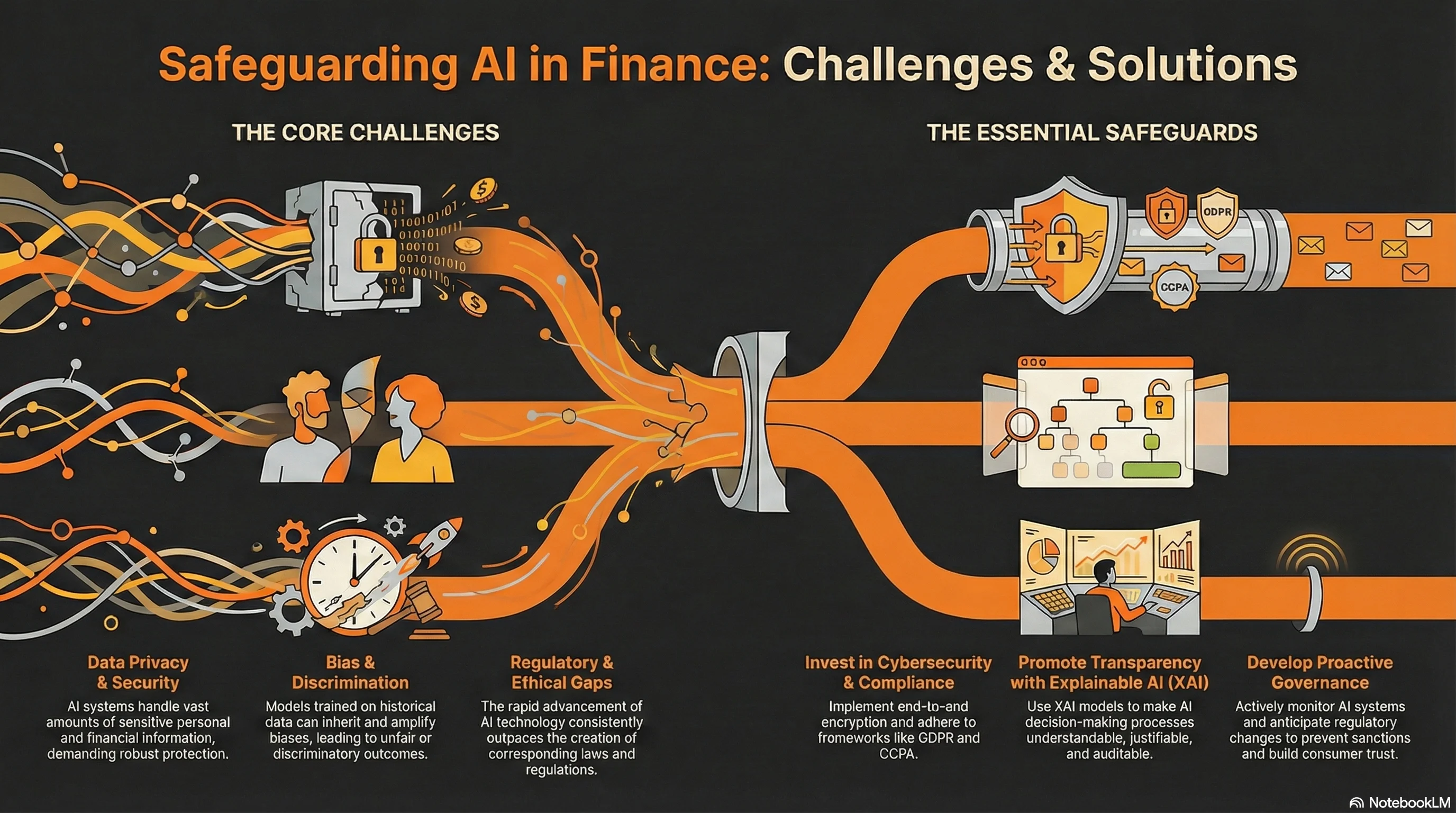
It is crucial to check the challenges, potential risks, and ethical considerations of AI tools. Another noticeable thing is to check for their language models and technologies to find the right one. Let’s explore these pointers:
Data Privacy and Security Concerns
Finance with AI solutions is a promising alternative to manual human intervention for data collection and data analysis. But now, the finance market can handle vast amounts of sensitive financial data, such as personal information and identification details, and protecting this information is important.
Financial institutions must invest heavily in cybersecurity by implementing end-to-end encryption and safeguarding data during storage. Data management practices should include anonymization and pseudonymization techniques to minimize the risk of exposing identifiable information.
Compliance with regulatory frameworks like the General Data Protection Regulation (GDPR) in the EU, the California Consumer Privacy Act (CCPA), and other local data protection laws is essential.
Bias and Transparency in AI Models
AI models are trained to learn from historical data, which means they contain inherent biases. If these biases are not found and removed, AI systems may face discrimination, leading to unfair results. This not only harms individuals but can also result in legal and reputational risks for organizations.
To promote fairness, Explainable XAI models can be implemented. These models help stakeholders to understand and implement how AI models make decisions. It also ensures that the processes used are transparent and justifiable.
Moreover, regular audits, training, and updating of AI algorithms can help in overcoming such dependencies. By doing this, ethical standards are maintained, and trust is built among consumers.
Navigating Regulatory and Ethical Boundaries
There is and always will be an ethical boundary between humans and AI, but the rapid advancement in the finance sector often outpaces existing regulations. Firms must stay active as these tools are introducing various applications, data use, and ethical considerations.
Anticipating regulatory changes and proactively adopting best practices is essential if someone wants to stay updated in this technological era. Developing comprehensive governance and monitoring the ongoing ones can help in managing associated risks.
Failing to implement both current and emerging technologies could result in legal sanctions. It may also lead to loss of public interest and trust, with a range of long-term strategic disadvantages.
The Future of AI in Finance
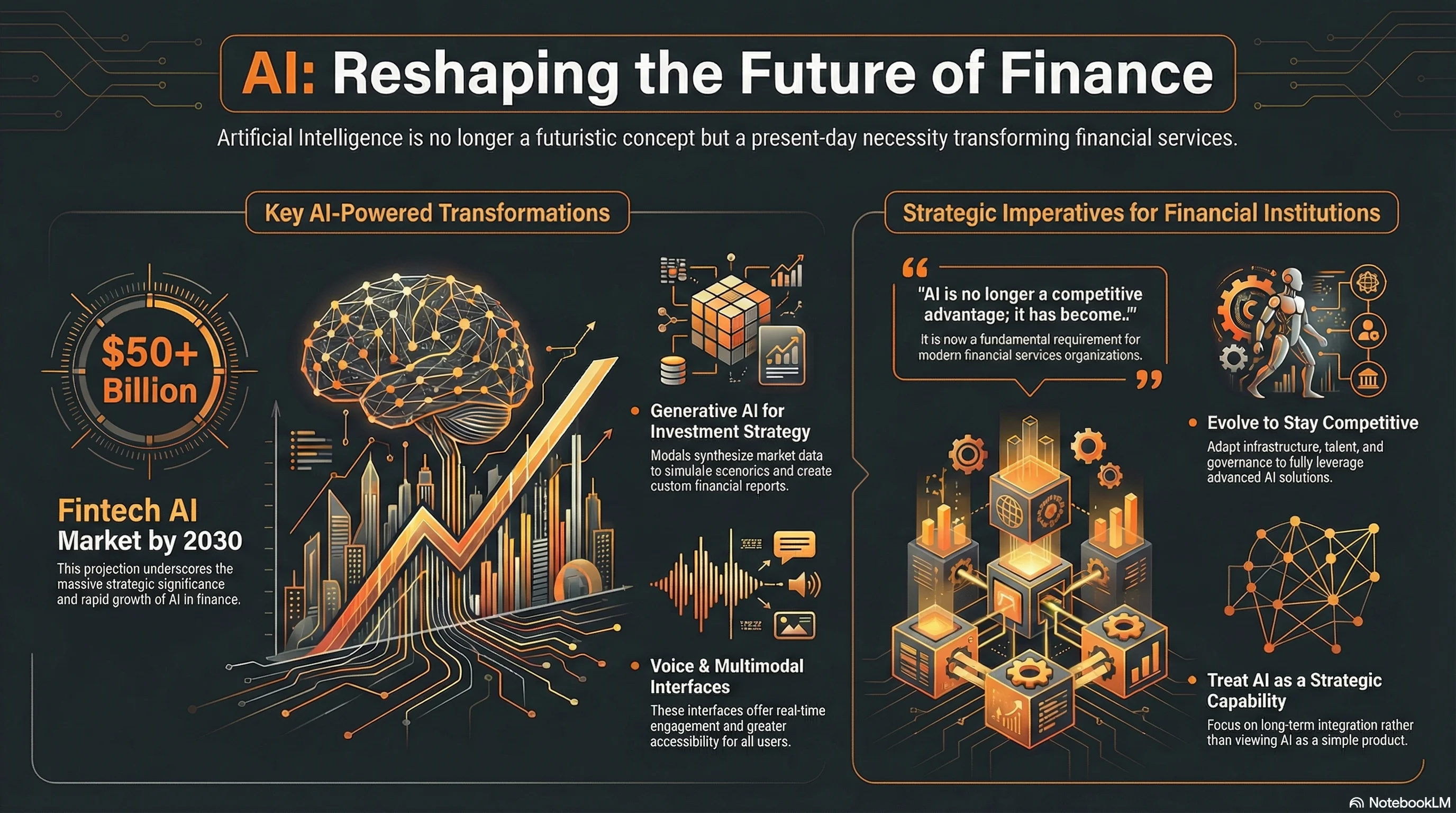
Artificial Intelligence is no longer a futuristic concept in the financial services industry; it is a present-day catalyst for transformation. The global fintech AI market is projected to surpass $50 billion by 2030, underscoring its strategic significance in the finance industry.
Voice and Multimodal Interfaces
In the next few years, voice assistants will be a new trend. It will reshape the finance landscape and will help people find ways to interact with financial platforms. These interfaces will offer accessibility and real-time engagement that caters to diverse user demographics, supporting deeper insights and intuitive interfaces.
Generative AI in Investment Strategy and Research
Generative AI models are trained on market data. They can synthesize this data and stimulate investment scenarios. Analysts and advisors use these tools to explore outcomes, document processing, investment management, and craft custom financial reports and investment research.
AI-First Financial Ecosystems: What’s Next?
It is not easy to predict what’s next for finance with AI solutions. But it sure can be said that, from opening banking APIs to autonomous financial planning tools, the future points to fully integrated financial services and ecosystems.
Financial service organizations must adopt these changes to evolve their infrastructure, talent, and governance to stay updated while taking advantage of advanced AI solutions.
Conclusion: Building the Financial Institutions of Tomorrow
According to AIChief, AI is no longer a competitive advantage that people find fascinating; it has become a necessity for our generation. If you’re still dealing with structured and unstructured data in finance, various tools are available that enable financial services organizations to provide personalized financial advice.
Although these tools are beyond human intelligence, anyone can invest in AI capabilities, establish ethical AI frameworks, partner with fintech innovators, and prioritize transparency. Treat AI not as a product, but as a long-term strategic capability to lead in the digital era.
FAQs

Arfa Farheen
Arfa Farheen is part of AIchief's global editorial team, reviewing and testing AI tools. With a background in digital marketing, she helps businesses grow their online presence using simple, no-code strategies.