AI Use Cases
How AI in Risk Management Cuts Fraud Losses by 20%?
Discover how AI is transforming risk management across industries, from fraud detection and cybersecurity to predictive maintenance and regulatory compliance.
Share
We’re living in a complex and interconnected world, where managing risk has become more critical than ever before for businesses across all industries. Traditional methods are quite valuable, but they often fall short in identifying subtle patterns and future threats.
A 2025 analysis found 85% of risk professionals anticipate AI will significantly improve prediction/mitigation, and 90% of financial institutions use AI for better real-time risk monitoring.
This is where artificial intelligence steps in to transform how organizations access and manage risks. It uses predictive analytics, real-time data processing, and adaptive learning methods to transform risk management. Risk management using AI is more proactive, precise, and resilient.
Specifically in financial services, 68% of firms consider AI a top priority, signaling that the industry is placing strategic emphasis on AI as a risk tool.
But how exactly can this technology reshape industries and safeguard their futures? Let’s explore the transformative potential of AI across different industries and sectors. Here are some of the stats:
- 38% of the firms are unaware of AI tools and LLMs.
- 68% of financial firms consider AI in risk and compliance a top priority.
- According to a report by Deloitte, over 55% of financial institutions have integrated AI into their risk management frameworks.
What is the role of AI in Risk Management?
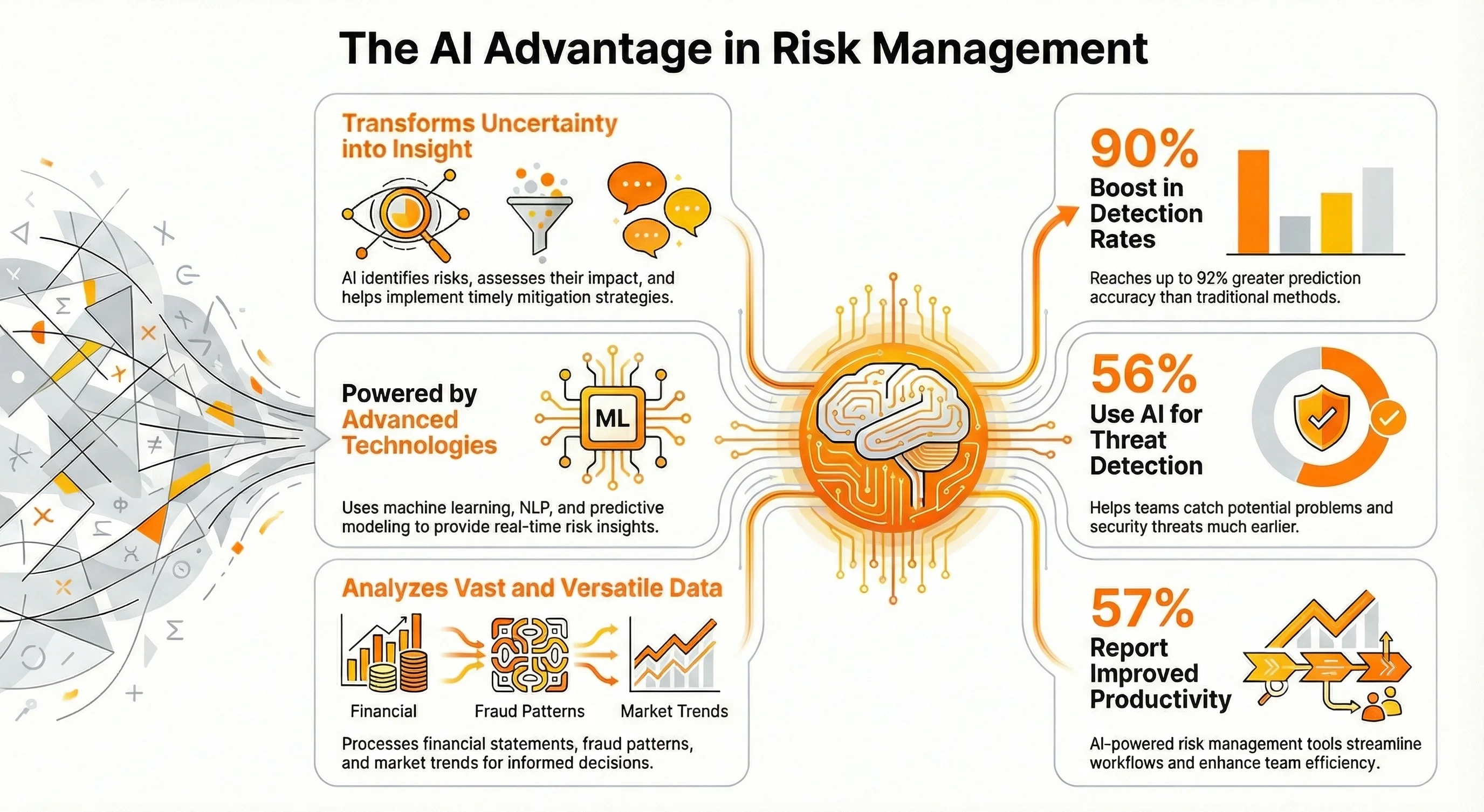
The role of AI in risk management is transformative because it helps organizations identify uncertainty. This modern risk management process can also identify risks, assess their impact, and implement timely mitigation strategies.
More than 78% of organizations say they track AI‑related risks as part of their digital risk posture. It indicates that risk teams are recognizing AI’s central role in modern risk frameworks.
All of this is done with the help of advanced AI technologies, such as machine learning (ML) algorithms, natural language processing (NLP), and predictive modeling. These technologies provide real-time risk insights that traditional systems and human analysts can match.
AI-driven risk models offer sharper insight than legacy tools, boosting detection rates by 90% and prediction accuracy by up to 92% over traditional methods.
AI systems can analyze vast datasets from versatile sources, including financial statements, credit card fraud patterns, and market trends, to deliver accurate data for informed decisions. They reduce false positives, improve threat detection, and manage risk more effectively across industries.
More than 56% of organizations report using AI to enhance threat detection, helping teams catch problems earlier. While 57% cite improved productivity from AI‑powered risk tools
Why AI is Both a Risk and a Solution
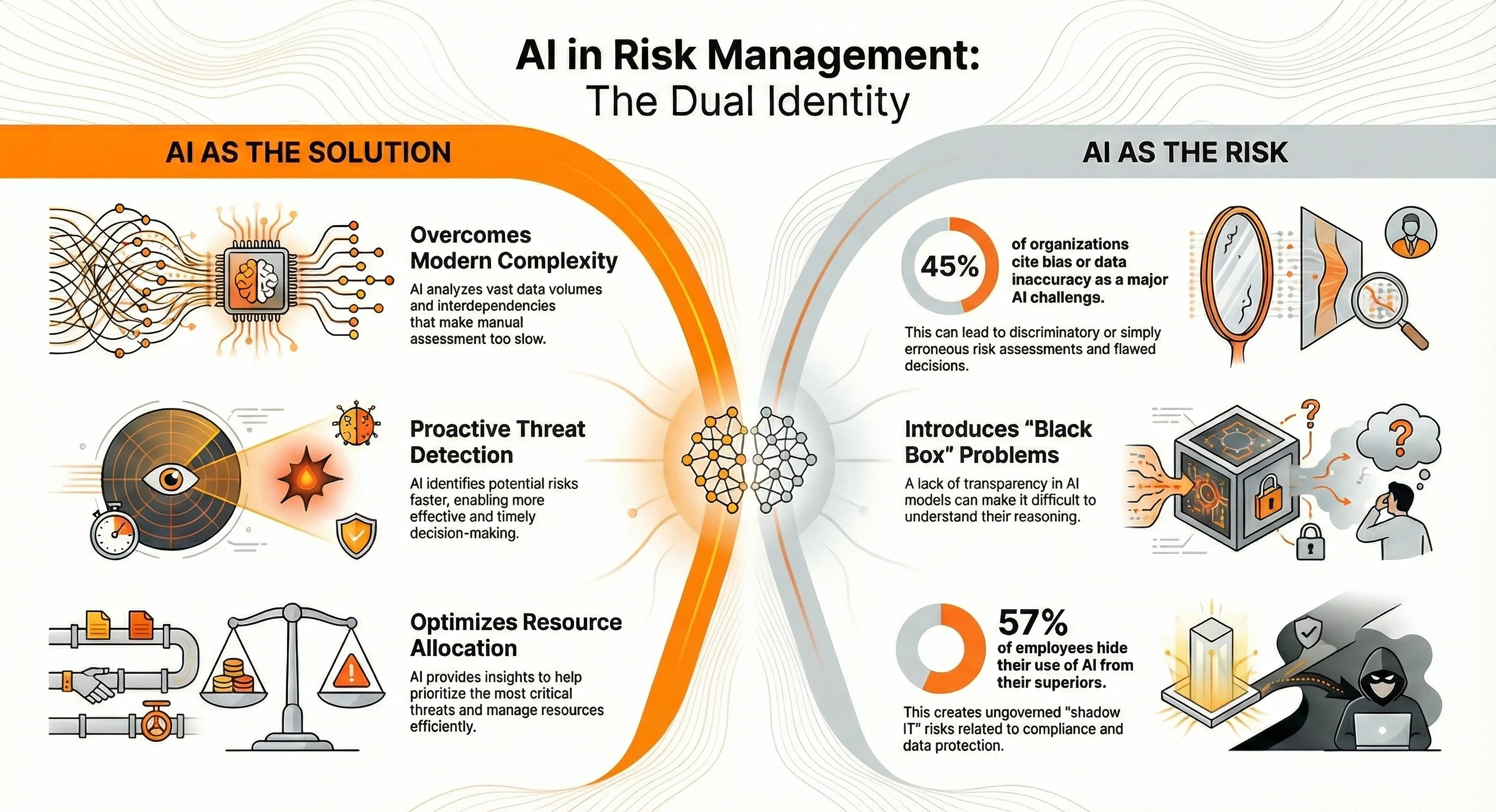
The unique perspective of AI is that it overcomes challenges, but can also cause challenges. What that sentence means is that, on one hand, AI systems are designed to identify risks faster than others, but on the other hand, AI itself introduces risks, such as biases in training, lack of transparency, and over-reliance.
The solution-based approach can enhance threat detection and support more effective strategies for management. The risk-based approach is similar to machine learning models, which may misclassify data or fail to account for edge cases, leading to flawed risk assessments.
The Need for AI in Risk Management
The complexity and volume of risks organizations are facing today require more advanced solutions with a lower error rate. Nothing else but AI tools are designed in this way for a growing number of variables, data points, and interdependencies that make manual risk assessment both time-consuming and error-prone.
In a global survey of nearly 50,000 workers, 58% say they intentionally use AI tools in their work, and 57% hide that usage from superiors.
The table below shows the aspects why we need AI tools for risk management:
| Aspect | Details |
|---|---|
| Challenge | Increasing complexity and volume of risks in organizations |
| Traditional Tools | Insufficient for modern risk management; manual assessment is time-consuming and error-prone |
| Impact of Growing Variables | More data points and interdependencies complicate risk assessment |
| AI Technologies Benefits | Proactive risk identification and faster decision-making |
| Data Analysis | Analyzes both structured and unstructured data |
| Insights Provided | Helps prioritize threats and allocate resources effectively |
| Importance of AI | Essential for operational resilience, compliance, and data protection |
In an IBM adoption survey, 45% of organizations cited data accuracy or bias as a significant AI challenge, making erroneous or discriminatory risk signals a real worry
Applications and Use Cases of AI in Risk Management
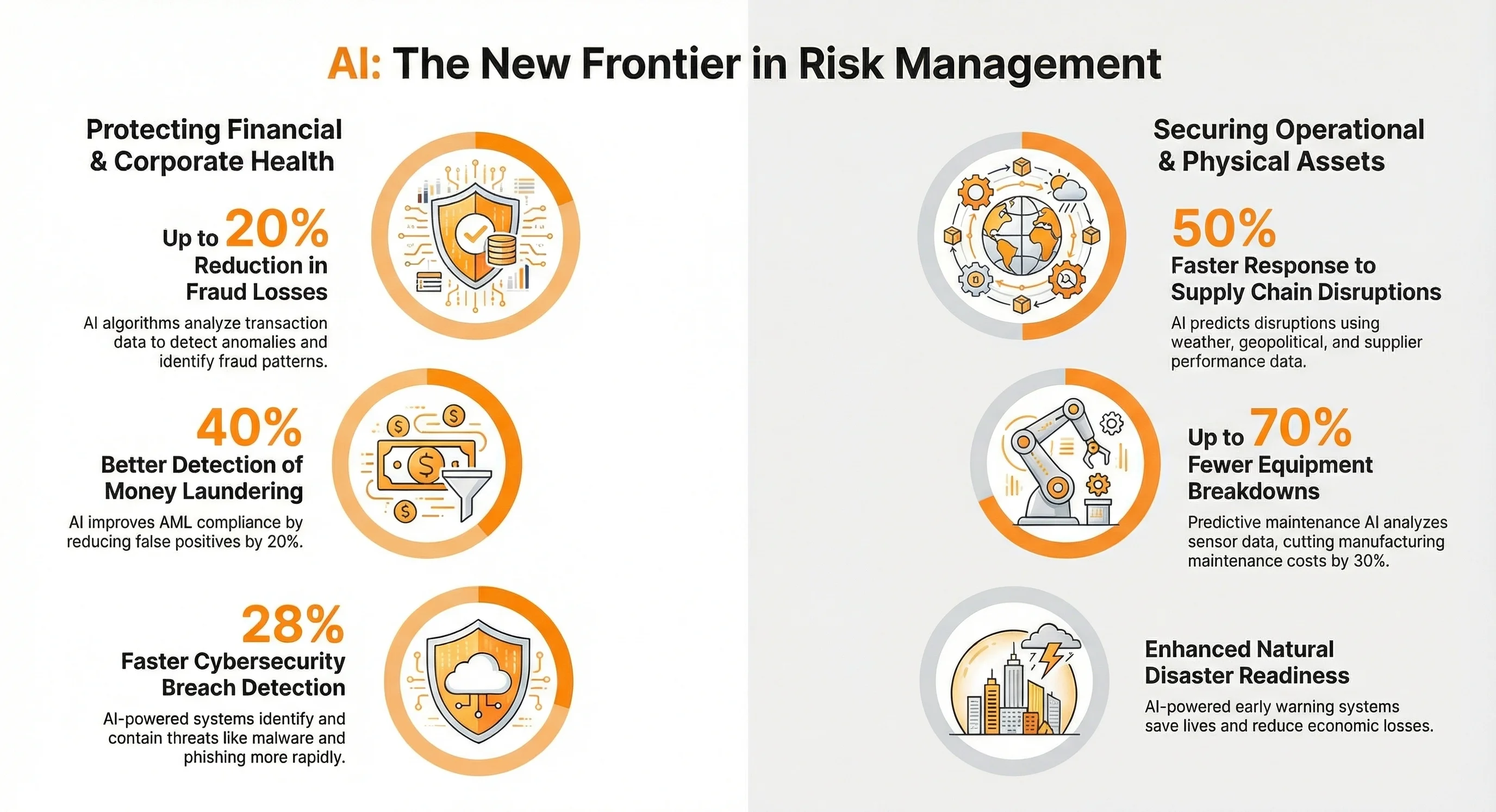
Risk is present in almost every sector, but the main question is how to tackle it.
A 2025 report shows AI is vital for financial security: 90% of banks use it for fraud detection, tackling payment fraud (39%), scams (50%), and AML (30%).
Some of the industry-based applications of AI in this case are listed below:
| Area of Application | Description | Benefits / Key Points | Supporting Data / References |
|---|---|---|---|
| Fraud Detection and Prevention | Uses AI algorithms to analyze transaction data for anomaly detection and fraud pattern recognition. | Reduces fraud losses up to 20%, enhances security, and minimizes false positives | McKinsey report |
| Credit Scoring and Loan Assessment | Leverages alternative data sources like utility bills and social media for credit evaluation. | Expands credit access to 1.7 billion unbanked, reduces default rates | World Bank |
| Market and Portfolio Risk Analysis | Employs machine learning to analyze real-time market data, sentiment, and simulate scenarios. | Improves risk assessment, market trend prediction, and strategic planning | BralcRock |
| Anti-Money Laundering (AML) Compliance | Detects illicit financial activities through pattern recognition, NLP, and anomaly detection. | 40% improvement in detection, 20% reduction in false positives | PwC |
| Cybersecurity Threat Detection | Uses AI to identify malware, phishing, and insider threats; faster breach response. | Detects threats 28% faster, reduces operational damage | IBM |
| Supply Chain Risk Prediction | Analyzes disruptions using data on weather, geopolitical factors, and supplier performance. | 50% faster response to disruptions, better sourcing strategies | Capgemini |
| Risk Management in Insurance | AI-driven analysis of customer data for claims, underwriting, and fraud detection. | Better risk selection, operational efficiency, and fraud detection | N/A |
| Customer Churn Prediction | Identifies at-risk customers and creates retention strategies. | Reduces churn, improves customer relationships, enhances ROI | N/A |
| Predictive Maintenance in Manufacturing | Predicts equipment failures via sensor data, reduces costs and downtime. | Cuts maintenance costs by up to 30%, reduces breakdowns by 70% | PwC |
| Natural Disaster Risk Assessment | Uses satellite and climate data for early warning systems. | Saves lives, reduces economic losses, and improves disaster response time | United Nations |
| Third-Party Vendor Risk Evaluation | Automates risk assessment of vendors using historical and predictive analytics. | Faster, objective risk scoring; prevents breaches | EY, Prevalent |
| Drug Safety and Compliance | Analyzes large data sets for adverse drug reactions. | Faster detection, regulatory compliance, and risk mitigation | FDA |
| Vehicle Diagnostics | Real-time analysis of vehicle sensor data for predictive maintenance. | Reduces breakdowns, lowers maintenance costs | Market Research |
| Employee Misconduct Detection | NLP and sentiment analysis monitor employee behavior for misconduct. | Detects toxicity with 87% accuracy, promotes an ethical workplace | IBM Watson |
1. Fraud Detection and Prevention in Banking
As digital things are continuously improving, fraud is becoming common. In this scenario, AI can help. According to a McKinsey report, AI-enabled systems can reduce fraud losses by up to 20% by using advanced algorithms for anomaly detection.
AI platforms use behavioral analytics and pattern recognition, boosting bank fraud detection by approximately 50% and cutting false positives by up to 70%.
Some of you may be wondering how? The answer to that question is that these systems are designed to analyze vast amounts of transaction data to flag suspicious activities. As these models learn from historical data, they can identify new fraud patterns. This not only enhances security but also removes false positives.
2. Credit Scoring and Loan Assessment
Traditional systems don’t use advanced technologies, which is why they may overlook some valuable data points. AI tools, on the other hand, use alternative data sources, such as utility bill payments, mobile usage, and even social media behavior for loan assessment.
Traditional credit scoring relies on limited financial history, often excluding millions of people from formal credit markets. Globally, about 1.7 billion adults lack access to formal banking services, highlighting a vast inclusion gap that alternative AI models can help close.
According to the World Bank, such models can expand credit access to over 1.7 billion unbanked individuals globally. These AI systems can provide a fair evaluation that will help financial institutions reduce default rates while extending credit scoring services.
3. Market and Portfolio Risk Analysis
With AI tools, anyone can enhance the analysis of market and portfolio risks. Machine learning algorithms can process data in real time for the analysis of market feeds, as well as sentiment indicators to promote market trends and portfolio volatility.
AI forecasting models can improve prediction accuracy by up to 92% compared to traditional statistical methods, enabling risk managers to identify potential market shifts and volatility far more reliably.
Investment firms can also use AI to simulate various market scenarios to identify the exposure of different risk factors. For example, if AI can detect shifts in risk levels, it can adjust strategies accordingly. This allows risk managers to gain a competitive advantage in strategic planning that can align with long-term financial goals.
4. Anti-Money Laundering (AML) Compliance
One of the significant issues people face is money laundering, and traditional systems often struggle to detect laundering schemes because of rule-based methods.
However, AI can help in enhancing AML efforts. AI tools can detect patterns, perform anomaly detection, and use natural language processing to monitor transactions.
Advanced AML models also reduce false positives by up to 40%, saving compliance teams time and resources while improving overall detection precision.
According to PwC, financial institutions that adopted AI for AML compliance saw a 40% improvement in detection rates and a 20% reduction in false positives. AI can also scan documents and communications to find financial behaviors indicative of money laundering. These tools can improve compliance with global regulatory standards.
5. Cybersecurity Threat Detection
With the advancement in digital systems, cyber threats are also escalating. AI stands at the forefront of these defense strategies.
Research by IBM shows that organizations using AI for cybersecurity can identify and contain data breaches 28% faster than those who are still using traditional methods.
It is because AI tools adapt over time to attack new patterns that enable faster detection of malware, phishing attempts, and insider threats. The result of this is a reduction in response times and operational damage.
6. Supply Chain Risk Prediction
Supply chains can be impacted by global disruptions, such as geopolitical tensions, natural disasters, and even pandemics.
But AI tools offer solutions for that with predictive insights based on historical disruptions, weather data, supplier performance, and geopolitical indicators.
According to a Capgemini report, companies using AI for supply chain risk management experienced a 50% faster response rate to disruptions. For example, predictive analytics can suggest alternative sourcing options or production times of products, making this approach valuable for the business community.
7. Risk Management in Insurance
Everyone holds insurance, sometimes it is based on health, sometimes on your bank account, or on life insurance. But here’s the tricky question: how is AI being used in the insurance sector? In this sector, AI has become very powerful in managing claims and underwriting risks.
According to industry surveys, about 80% of insurers are already using or planning to use AI in their operations, spanning underwriting, claims processing, risk assessment, and fraud detection
AI tools are designed to analyze customer profiles, driving records, and medical histories more accurately than humans, and there’s no doubt about that. As it is progressing day by day, the insurers benefit from improved risk selection, enhanced fraud detection, and greater operational efficiency.
8. Customer Churn Prediction
Another interesting aspect of AI in improving risk management comes when customer churn prediction is improved. It can enhance risk management by identifying at-risk customers and providing retention strategies.
Adoption studies show that organizations using AI churn models improve retention metrics significantly, often by 10–25%, depending on the industry and data quality.
These tools can provide early warning signals, personalized retention strategies, improved ROI, deeper customer insights, and data-driven decision making. All of these factors can contribute to building relationships between customers and reducing churn.
9. Predictive Maintenance in Manufacturing
The manufacturing sector is no exception when it comes to using AI. In this sector, unplanned equipment malfunction can be costly, so AI tools can be used for predictive maintenance.
According to PwC, predictive maintenance powered by AI can reduce maintenance costs by up to 30% and eliminate breakdowns by up to 70%.
This results in enhanced maintenance for the teams and allows them to act proactively to enhance operational efficacy. AI can also analyze sensor data, usage logs, and environmental conditions before they occur.
10. Natural Disaster Risk Assessment
In case of natural disasters, AI models are being implemented to assess the risk, such as hurricanes, earthquakes, and floods. AI can use satellite imagery to access the data or even check for historical climate data to assess this risk.
According to the United Nations, AI-powered early warning systems can reduce disaster response time, potentially saving thousands of lives and billions in economic losses. And with that, governments can make better use of AI for strategic planning.
11. Third-Party Vendor Risk Evaluation
Businesses are now working on interconnected environments where third-party vendors pose a significant risk exposure. AI technologies are increasingly designed for their ability to enhance enterprise risk management by automating vendor assessments and monitoring.
According to EY, AI models can assess risks based on historical data and predictive analytics, providing objective risk scores that aid in informed decisions swiftly.
Furthermore, a study by Prevalent revealed that 61% of organizations experienced a third-party breach in the past year. This shows the need for systems and tools to manage risk.
12. Drug Safety and Compliance
The pharmaceutical industry is also facing challenges in monitoring drug safety due to vast data sets and stringent regulatory requirements. AI systems can transform this pharmacovigilance with their advanced algorithms.
The FDA receives millions of Individual Case Safety Reports annually, and AI's ability to analyze large volumes of unstructured data enables faster and more accurate detection of adverse drug reactions. This can help in adapting to regulatory standards and risk mitigation.
13. Vehicle Diagnostics
Risks are everywhere, and vehicle diagnostics is no exception. AI-powered diagnostics are transforming vehicle maintenance by providing real-time risk insights into potential mechanical failures.
The AI in the automotive market was valued at $4.8 billion in 2024 and is projected to grow at a CAGR of 42.8% between 2025 and 2034.
AI models analyze data points from various sensors to predict issues before they lead to breakdowns. The result of this automation is enhancing operational resilience and reducing maintenance costs.
14. Employee Misconduct Detection
Monitoring employee behavior is an important factor while considering ethical standards and minimizing legal risks. AI tools and systems are designed on natural language processing and sentiment analysis that can detect communication patterns that may indicate misconduct.
Research by IBM Watson AI Ethics suggests that AI sentiment analysis can identify workplace toxicity with an accuracy of up to 87%, enabling organizations to address potential risks proactively.
Frameworks and Regulations for AI Risk Management
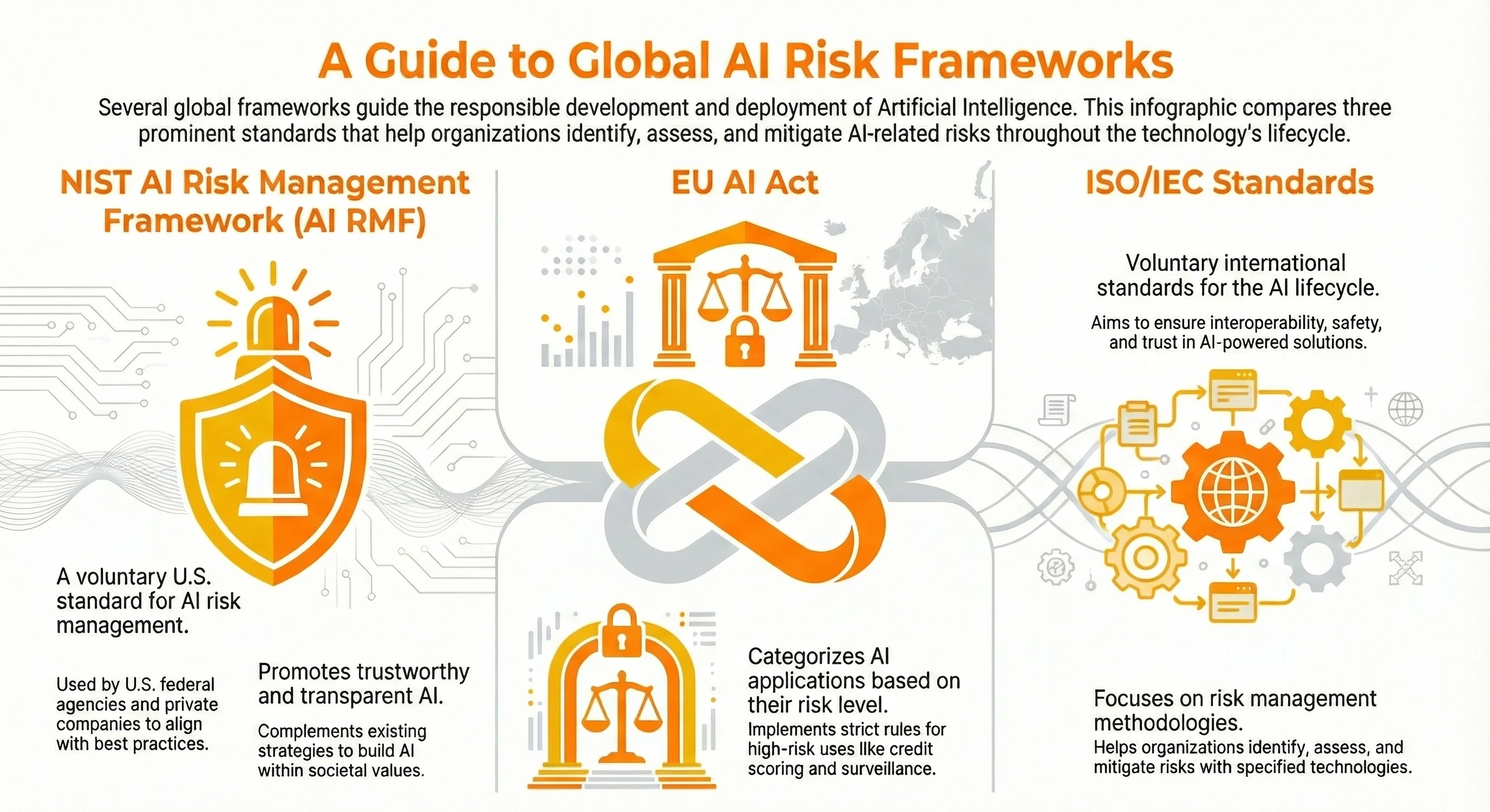
Here are some of the adopted frameworks for AI in risk management and prevention:
a) NIST AI Risk Management Framework (AI RMF)
The AI RMF provides a set of guidelines for identifying, evaluating, and mitigating AI-related risks. It is a structured approach adopted by U.S. federal agencies and private companies to align with best practices in risk management.
The NIST AI Risk Management Framework, a voluntary U.S. standard, aids organizations in managing AI risks across the AI lifecycle.
Its goal is to promote trustworthy AI by addressing potential risks and ensuring transparency and accountability. The AI RMF complements existing risk management strategies and helps organizations to build everything within societal values.
(b) EU AI Act
This act aims to regulate the development and deployment of AI systems in Europe, categorizing AI applications based on their risk levels. It is focused on implementing transparency, accountability, and testing for high-risk AI uses, such as credit scoring and biometric surveillance.
The EU AI Act is the world’s first legally binding AI regulation, and it came into force on August 1, 2024
Overall, the EU AI Act aims to provide innovation while safeguarding fundamental rights, privacy, and safety.
(c) ISO/IEC Standards
ISO/IEC 23894 and other standards define methodologies for AI risk assessment, management, and lifecycle monitoring. Compliance with these standards helps institutions ensure interoperability, safety, and trustworthiness in AI-powered solutions.
ISO/IEC 23894:2023 is a voluntary standard for AI-specific risk management, aiding organizations in identifying, assessing, and mitigating risks across the AI lifecycle.
The main focus is to manage risk with specified technologies for identifying, assessing, and mitigating risks throughout the AI lifecycle.
Best Practices for Implementing AI in Risk Management
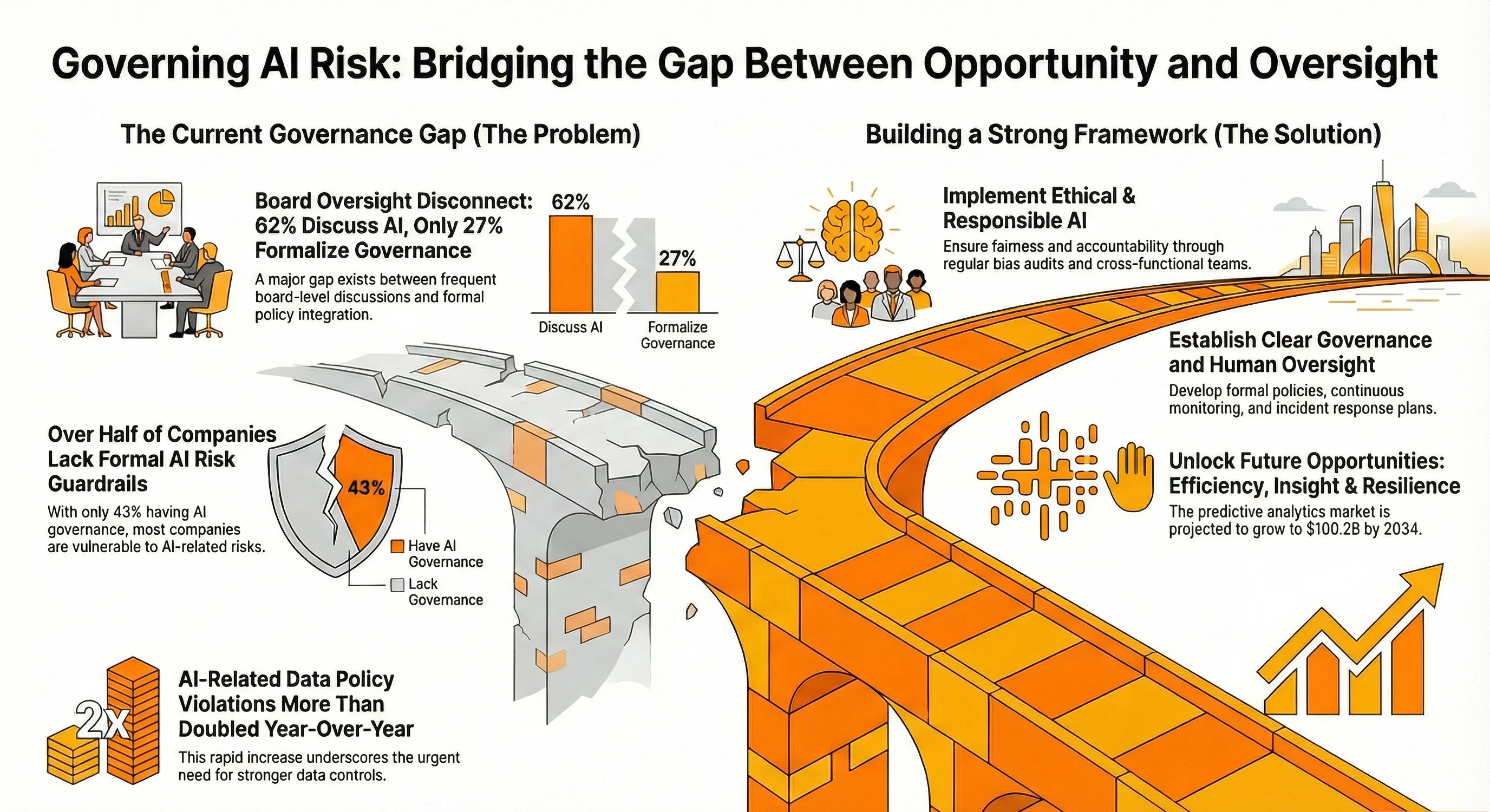
Best practices include using high-quality training data, conducting bias audits, involving cross-functional teams, maintaining human oversight, and staying updated with regulatory developments and ethical guidelines.
High‑quality data governance — including clear ownership, access controls, and ongoing validation — is critical to reliable AI outputs and reduced model error rates over time.
Some of the best practices of using and implementing AI in risk management are as follows:
1. Using AI Ethically and Responsibly
Organizations should be cautious that AI tools are designed with fairness, accountability, and inclusivity in mind. Ethical AI use involves stakeholder engagement, bias audits, and alignment with ESG (Environmental, Social, Governance) values.
Best practice guides recommend formal, periodic auditing of AI systems rather than ad‑hoc checks, especially for models making risk‑sensitive decisions.
2. Mitigating AI-Related Risks
Users need to establish clear AI policies, continuous monitoring, incident response plans, and employee training, which are vital steps. Institutions must also diversify training data to reduce inherent biases and strengthen AI governance practices.
With 43% having AI governance and 25% implementing a policy, over half of companies lack formal AI risk guardrails, increasing vulnerability.
3. Governance and Board Oversight
Boards of directors play a critical role in overseeing AI implementation. They must understand AI’s impact on enterprise risk management and ensure adequate investment in tools, talent, and training to enable safe deployment.
AI is a frequent discussion topic (62%), yet only 27% of boards have formally incorporated AI governance into committee charters, revealing a governance gap.
The Future of AI in Risk Management
In the future, risk detection will undergo a significant shift to mitigate risk. New developments may include the use of generative AI and large language models for scenario modeling, AI-powered dashboards for real-time risk insights, and integration with blockchain for transparent audit trails.
As threats progress, AI will continue to be refined for dynamic risk environments.
A recent report showed monthly data policy violations involving AI more than doubled year‑over‑year, with 54 % of incidents involving regulated data, underscoring the need for strong governance.
Key challenges of these emerging threat protection tools include balancing automation with human judgment, evolving regulatory pressures, operational risks, and securing sensitive data.
However, with the right frameworks and tools, AI offers opportunities for efficiency, insight, and resilience in financial risk management.
Despite challenges, AI presents opportunities for:
- Increased efficiency.
- Deeper insights.
- Greater resilience in financial risk management.
Crucial for AI risk tools, the predictive analytics market is expected to grow from $14.41B in 2024 to $100.2B by 2034 (21.4% CAGR), underscoring the strong demand for data-driven foresight.
Conclusion - Manage Risk With AI Systems
In conclusion, if someone needs to identify potential risks, risk professionals, along with compliance professionals, can help in accessing real-time risk insights. Organizations are using AI to minimize the associated risks and build trust and resilience.
There are artificial intelligence AI sophisticated tools available that use proactive approaches, for which the only requirement is simple text-based input data collection for data analytics without human resources. Moreover, the national institute has also declared some government regulations for leveraging AI.
AIChief always researches and brings the most valuable insights for our audience, so you can learn and grow exponentially using this go-to source of information and AI tools hub.
FAQs

Asia Hussain
Asia helps brands create a strong online presence with smart content strategies. She also reviews and curates the best AI tools, shaping editorial content and providing insights at AIChief.