AI Showcase
Best AI Video Generator 2026: Creator vs Enterprise Guide
A 2026 deep-dive review of AI video generation tools: consumer vs enterprise positioning, digital human capability, commercial workflows and a scenario-based selection guide for creators, marketers and business teams.
Share
Heading into 2026, the AI video market has stopped competing on novelty. Generation quality across leading models has converged closely enough that raw output is no longer a meaningful differentiator for most commercial work. What separates platforms now is architecture: whether a tool is built for creative breadth or for governed, repeatable production at organisational scale.
That distinction matters because the two categories fail at each other's jobs in predictable ways. This review examines how the ecosystem has split, where each category delivers real efficiency gains, and how creators, marketers and enterprise teams should approach selection.
How AI Video Generation Reshapes Modern Content Creation Industry
The first-order effect everyone noticed was cost. The second-order effect, which took longer to surface, is that video stopped being a project and became a process. When a finished asset takes minutes rather than weeks, teams stop asking whether a piece justifies production and start asking which variant to test.
That shift changes organisational behaviour more than it changes output quality. Under traditional production economics, every concept carried enough sunk costs that teams defended weak ideas past the point of evidence. When production cost approaches zero, killing an underperforming angle becomes a routine decision rather than a political one — and that single change tends to move performance metrics more than any individual creative improvement.
The third effect is structural. Video is migrating out of specialist creative teams and into marketing operations, product education, support and internal communications. Departments that never commissioned video now produce it weekly, which is precisely why the tooling market has bifurcated instead of consolidating.
Core Differences Between Consumer-grade and Enterprise AI Video Tools
The split is not about quality tiers. It reflects two genuinely different design problems, and evaluating one against the other's criteria produces bad decisions.

Consumer-grade and creator-oriented platforms optimise for range. Pollo AI's AI Video Generator sits firmly in that category, consolidating well over a hundred distinct video tools into a single environment so that text-to-video, image-to-video, video-to-video restyling and reference-driven generation are all accessible without switching services or learning separate interfaces. Its digital human module produces presenter footage up to two minutes long with expressive delivery rather than static narration, and its reference-based mode maintains character and scene consistency across frames — the specific weakness that historically made multi-shot generated content read as disjointed. No filming setup or editing background is required, which is what makes it viable for individual creators and small commercial teams.
What Creator-grade Platforms Optimise For
Breadth, speed and stylistic flexibility. A creator producing short-form content across several formats needs to move between an anime-styled sequence, a realistic product clip and a talking-head explainer within the same afternoon. Tool consolidation matters more here than governance features, because the bottleneck is creative iteration, not approval workflow.
What Enterprise Systems Optimise For
Consistency, compliance and language coverage. An enterprise producing two hundred training modules does not need stylistic range; it needs every module to look identical, use approved assets, and exist in twelve languages with accurate delivery. These are operational requirements, and platforms built around them deliberately constrain creative freedom to guarantee uniformity.
Step-by-Step Workflow for Commercial AI Video Creation
Define the Asset Class Before Choosing a Tool
Classify the output first. Performance creative for paid channels, organic short-form, product demonstration and internal education have almost nothing in common operationally. Most tool selection errors come from evaluating a single platform against four incompatible use cases and concluding that everything is inadequate.
Build a Reusable Reference Set
Assemble the fixed visual inputs before generating anything: brand palette, product imagery, a character reference if a recurring presenter is used, and one approved sample frame. Reference-conditioned generation is what turns isolated clips into a recognisable series, and freezing this set early prevents the drift that appears when assets are produced weeks apart under different instructions.
Produce the Master, Then Derive Placements
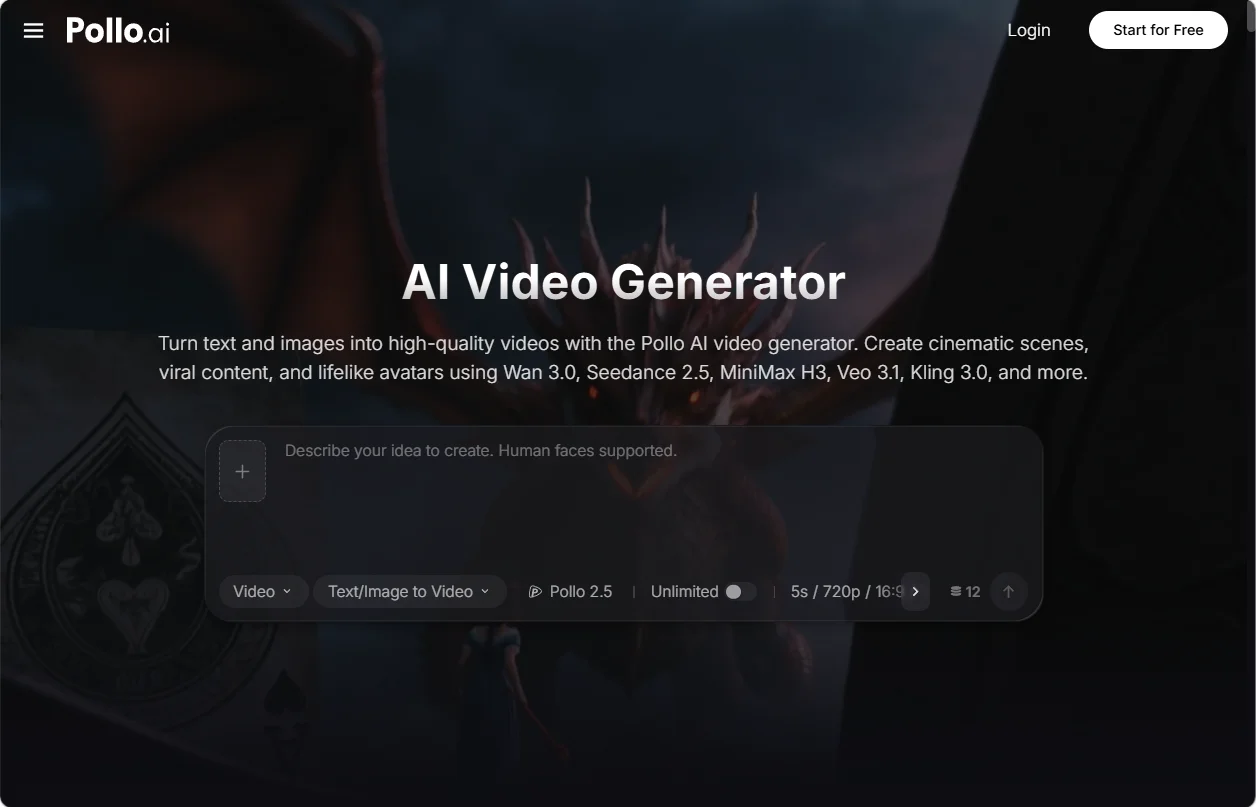
Generate the full-length version first and adapt outward. Working inside Pollo AI's AI Video Generator, one concept can be extended across image-driven clips, digital human segments and stylised sequences without rebuilding the underlying message for each output, which is what keeps a campaign coherent across surfaces. Frame with vertical crop margins from the start rather than retrofitting them.
Test One Variable Per Version
When producing variants for scalable AI video production for business, change a single element between versions —the opening hook, claim order, presence of a presenter. Versions differing in four ways yield results that cannot be attributed to anything, which is the most common reason volume testing produces no learning.
Where Enterprise Localisation Platforms Fit
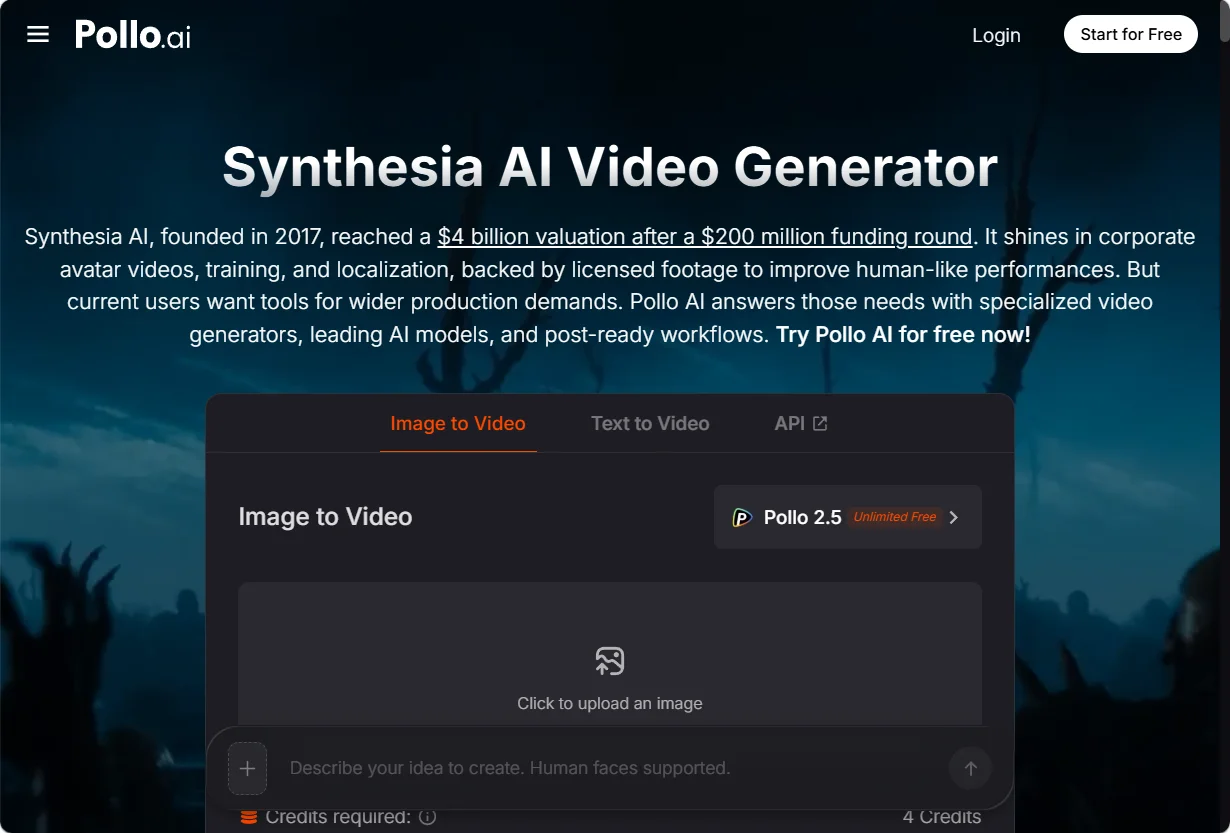
For scripted, high-volume organisational content, the requirements shift entirely, and this is the territory Synthesia occupies as a complementary category rather than a direct substitute.
Its strength is governed presenter output at scale: a roster exceeding one hundred and sixty avatars with natural gesture and emotional range, delivery across more than one hundred and forty languages, and an assistant that converts an internal document or a supplied page into a complete script with structured scenes and generated supporting shots. Centralised brand configuration keeps every output visually aligned, and its licensed media library removes rights questions for material distributed across a regulated organisation.
For onboarding several hundred employees onto a compliance process in eight languages, that machinery is correct. For producing a stylised brand short or an animated concept sequence, it contributes little — which is exactly the point of category separation.
Scenario-based Tool Selection Guide for Creators & Enterprises
Independent creators and short-form publishers should prioritise breadth and iteration speed. The relevant question is how many distinct output styles a single subscription covers, since fragmenting across four services destroys time saving entirely.
Ecommerce and performance marketing teams need volume plus consistency. Reference-driven generation and AI digital human video generation both matter here, because product explanation benefits from a spoken presenter while texture and demonstration content performs better without one.
Enterprise learning, HR and support functions should weight language coverage, asset licensing and brand lock-down above creative flexibility, which is where Synthesia's positioning is strongest. Larger organisations increasingly run both categories in parallel: one for campaign and social output, another for governed internal libraries.
Industry Outlook
The 2026 market has settled into a stable two-category structure, and that stability is useful. It means selection can finally be made on operational fit rather than model benchmarks.
Whether a team standardises on Pollo AI's AI Video Generator for multi-format creative output or on Synthesia for governed multilingual libraries, production access has stopped being the differentiator.
What remains scarce is editorial judgement — knowing which forty seconds of a message are worth telling, and in what order. Tooling has removed the excuse that producing it properly takes too long.
FAQs

Editorial Staff
The Editorial Staff at AIChief is a team of Professional Content writers with extensive experience in the field of AI and Marketing. AIChief was Founded in 2025, AIChief has quickly grown to become the largest free AI resource hub in the industry. Stay connected with them on Facebook, Instagram and X for the latest updates.