

Originally reported bytechcrunch
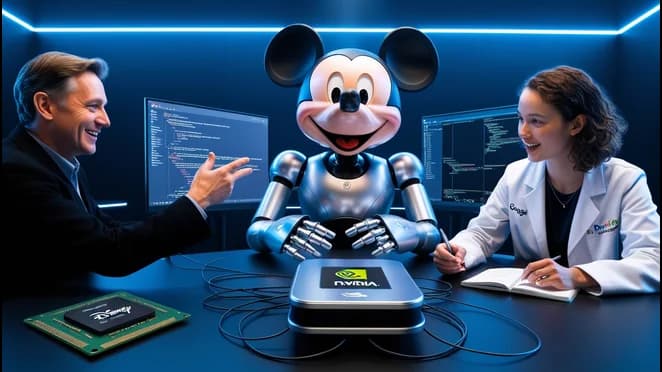
Nvidia is teaming up with Disney Research and Google DeepMind to develop Newton, a physics engine designed to enhance robotic movement in real-world environments. Announced by Nvidia CEO Jensen Huang at GTC 2025, Newton aims to improve how robots interact with their surroundings, making them more expressive and capable of handling complex tasks with precision.
Disney will be one of the first companies to use Newton, integrating it into its next-generation entertainment robots, including the Star Wars-inspired BDX droids. One of these droids even made a surprise appearance onstage during Huang’s keynote.
For years, Disney has been exploring the idea of incorporating robotic characters into its theme parks, and recent demonstrations, including one at SXSW 2025, have shown promising advancements. With Newton’s capabilities, Disney now believes the technology is ready for wider use and plans to introduce these robots to several park locations starting next year.
In a press release, Disney Imagineering SVP Kyle Laughlin emphasized the importance of collaboration with Nvidia and Google DeepMind in shaping the future of entertainment robots at Disney. Newton is designed to help robots navigate real-world challenges by simulating interactions with objects like food, cloth, and sand. This flexibility allows developers to refine robotic behaviors in a more controlled and efficient manner.
Newton will also integrate with Google DeepMind’s MuJoCo physics engine, which specializes in simulating complex, multi-joint robotic movements. Nvidia has announced that an open-source version of Newton will be available later in 2025, giving developers broader access to the technology.
Beyond Newton, Nvidia introduced other major innovations at GTC 2025, including its AI foundation model for humanoid robots, Groot N1, which enhances robotic perception and reasoning. The company also detailed its roadmap for next-generation AI chips, such as Blackwell Ultra and Rubin, and introduced a new line of personal AI computers. These advancements signal Nvidia’s continued push into AI-driven robotics and computing.
#news
ES
Editorial StaffEditor
The Editorial Staff at AIChief is a team of professional content writers with extensive experience in AI and marketing. Founded in 2025, AIChief has quickly grown into the largest free AI resource hub in the industry.
View all posts
What did you think of this story?
User Comments
Filter:
No comments yet. Be the first to comment!