

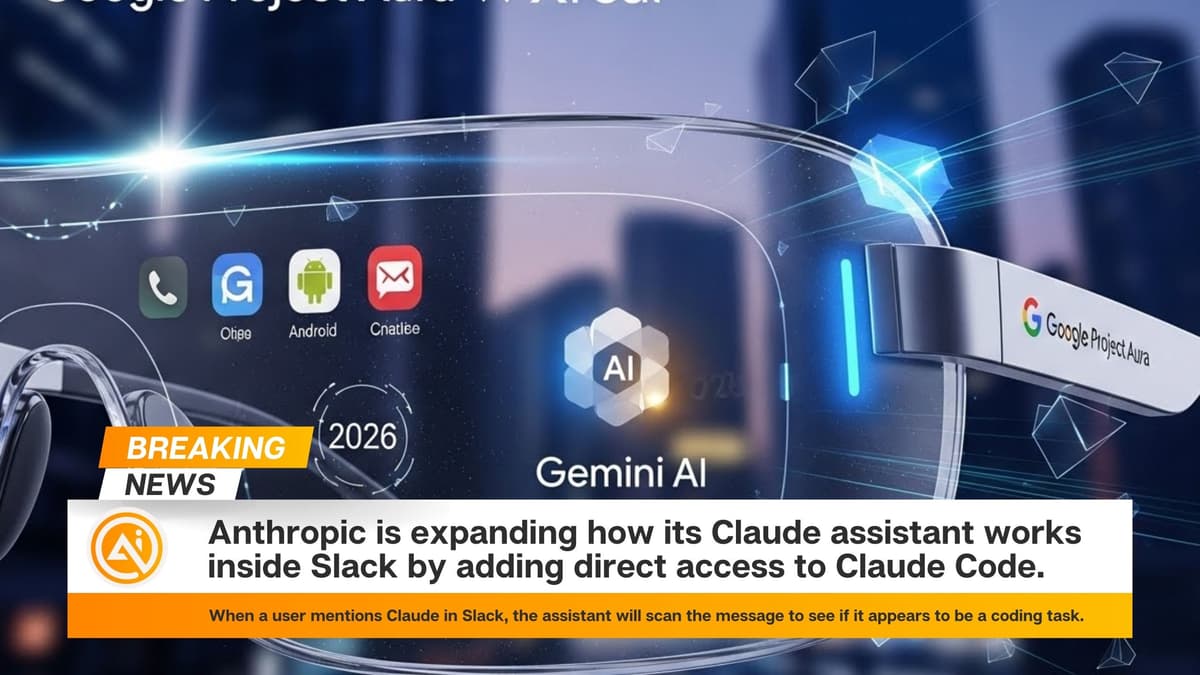
Google’s Project Aura is offering an early look at how Android could shape the next generation of smart glasses. Built with Xreal, the wired extended reality (XR) glasses resemble chunky sunglasses connected to a battery pack that also works as a trackpad. Google positions them not as simple smart glasses but as a lightweight headset experience.
In a recent demo, Project Aura created a virtual desktop where multiple Android apps ran side by side. With a field of view of up to 70 degrees, users could open Lightroom, watch YouTube, play a 3D tabletop game, and use Circle to Search and Gemini to identify artwork. The experience feels closer to Samsung’s Galaxy XR or Apple’s Vision Pro, but in a more discreet format.
A key advantage is that Aura uses the same Android XR platform as Samsung’s Galaxy XR headset, allowing apps built for one device to run on others without modifications. This may help solve the app shortages faced by devices like Meta’s Ray-Ban Display and Apple’s Vision Pro. Smaller hardware makers such as Xreal and upcoming AI glasses from Warby Parker and Gentle Monster can also tap into the shared Android XR app ecosystem.
Google also previewed prototype AI glasses capable of running standard Android apps. In one demo, an Uber widget appeared inside the display showing pickup details, directions, and maps powered by the existing Android app. YouTube Music worked similarly, and photos captured with the glasses could be viewed on a paired Wear OS smartwatch.
Google plans to support iOS as well, allowing iPhone owners using the Gemini app to access Gemini’s AI features on future Android XR glasses. Some third-party app limitations may apply on Apple’s platform, though Google says it is exploring solutions.
To avoid past mistakes, Google is partnering with hardware makers, enforcing visible recording indicators, strict sensor permissions, and stronger privacy safeguards. Project Aura remains a prototype with an expected launch in 2026, but Google hopes its Android ecosystem will give it an advantage in making everyday smart glasses mainstream. Pricing and detailed specifications are still unannounced.
The Editorial Staff at AIChief is a team of professional content writers with extensive experience in AI and marketing. Founded in 2025, AIChief has quickly grown into the largest free AI resource hub in the industry.