

Originally reported bybloomberg
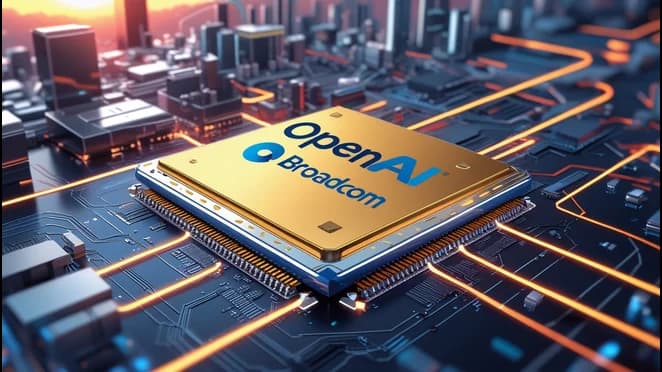
OpenAI is preparing to enter the semiconductor market by designing its own AI chip in partnership with Broadcom, according to a report from the Financial Times. The move marks a significant step for the artificial intelligence company as it seeks greater control over the hardware powering its models.
The company aims to produce and ship its first chips in 2026, people familiar with the matter told the FT. Initially, the chips will be deployed internally to support OpenAI’s own systems, though they could eventually position the firm as a direct competitor to Nvidia, which currently dominates the market for AI accelerators.
Nvidia’s GPUs have become the backbone of most AI applications, including OpenAI’s ChatGPT, but supply constraints and soaring costs have pushed companies to explore alternatives. By designing its own hardware, OpenAI hopes to secure a more reliable supply of chips optimized for its models, while also reducing its dependence on Nvidia.
Broadcom, a leading chipmaker known for its custom silicon partnerships, is expected to provide engineering and manufacturing support for the project. This collaboration could allow OpenAI to accelerate its timeline and ensure the new processors meet the specific demands of large-scale AI training and inference.
The decision comes as competition in the AI sector intensifies. Tech giants like Google, Amazon, and Microsoft have already invested in building their own specialized chips to power AI workloads. OpenAI’s entry into this space signals its ambition to stand alongside these players not only in software but also in hardware.
If successful, the chip initiative would give OpenAI more independence in scaling its infrastructure and potentially create new revenue opportunities. For now, however, the focus will be on proving the chips’ capabilities within its own systems before expanding more broadly.
With demand for AI computing surging worldwide, OpenAI’s partnership with Broadcom underscores the strategic importance of custom hardware in the next phase of the AI race.
#news
ES
Editorial StaffEditor
The Editorial Staff at AIChief is a team of professional content writers with extensive experience in AI and marketing. Founded in 2025, AIChief has quickly grown into the largest free AI resource hub in the industry.
View all posts
What did you think of this story?
User Comments
Filter:
No comments yet. Be the first to comment!