

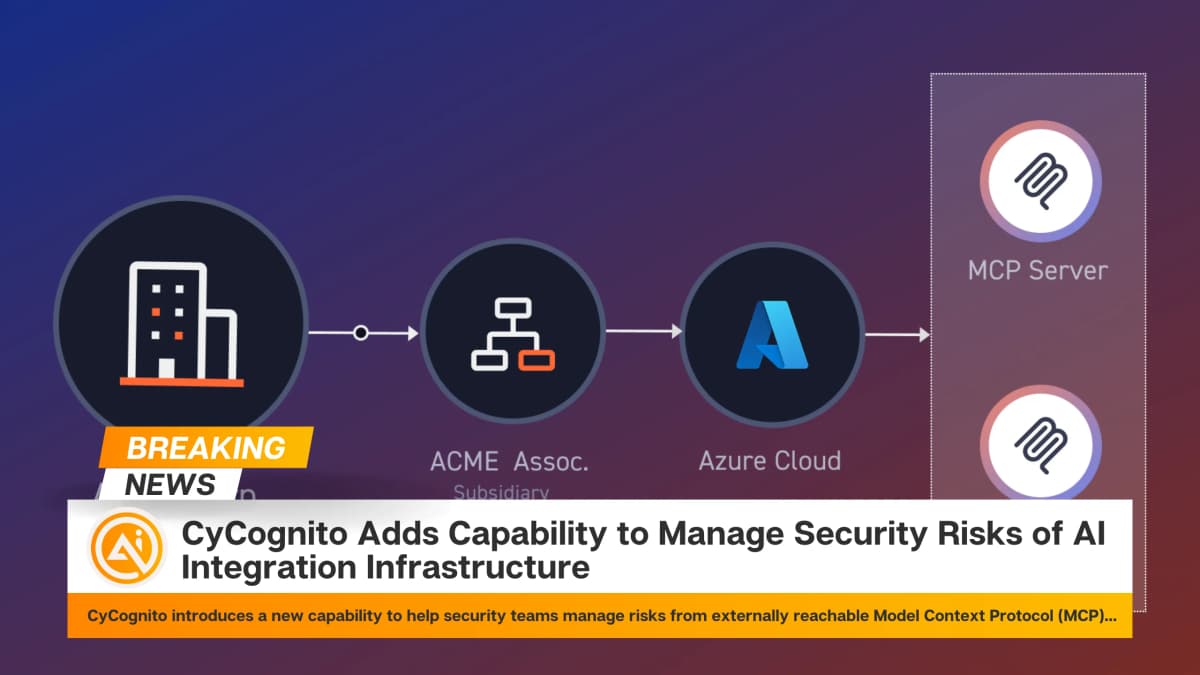
CyCognito announced a new capability to help security teams manage risks from externally reachable Model Context Protocol (MCP) servers. MCP servers, used to connect AI agents to data sources, services, and operational systems, can create security blind spots if not properly inventoried and reviewed, like traditional application systems.
With the rapid adoption of generative AI and the increasing use of AI systems in production, MCP servers are being used more frequently, becoming part of the external attack surface. CyCognito's MCP Server Exposure Management enables security teams to discover, track, and monitor MCP servers as part of their asset discovery and exposure management processes. It helps identify which MCP servers are externally reachable, review new or changed MCP servers, and scan for exposure due to configuration drift or changes in AI workflows.
Analysts note the speed of generative AI adoption, with Gartner predicting that by 2026, over 80% of enterprises will use generative AI APIs or deploy generative AI-powered applications. As more organizations integrate generative AI into their workflows, MCP servers will become more prevalent in the external attack surface.
The risk posed by MCP servers depends on what tools they expose, how these tools can be invoked, what downstream systems are accessible, and how access controls are enforced. As AI workflows evolve and change, the variables associated with these servers also change, potentially exposing new risks.
CyCognito’s MCP Server Exposure Management aims to address gaps in asset visibility, which have been an issue for a while due to modern cloud infrastructure and dynamic API-centric architectures. With increasing AI integration, regulatory pressure will likely lead to greater scrutiny of these systems.
The Editorial Staff at AIChief is a team of professional content writers with extensive experience in AI and marketing. Founded in 2025, AIChief has quickly grown into the largest free AI resource hub in the industry.